Beach-town tint care guide: how sand, salt spray, and sunscreen residue damage window film, and the cleaning routine that keeps it looking new.
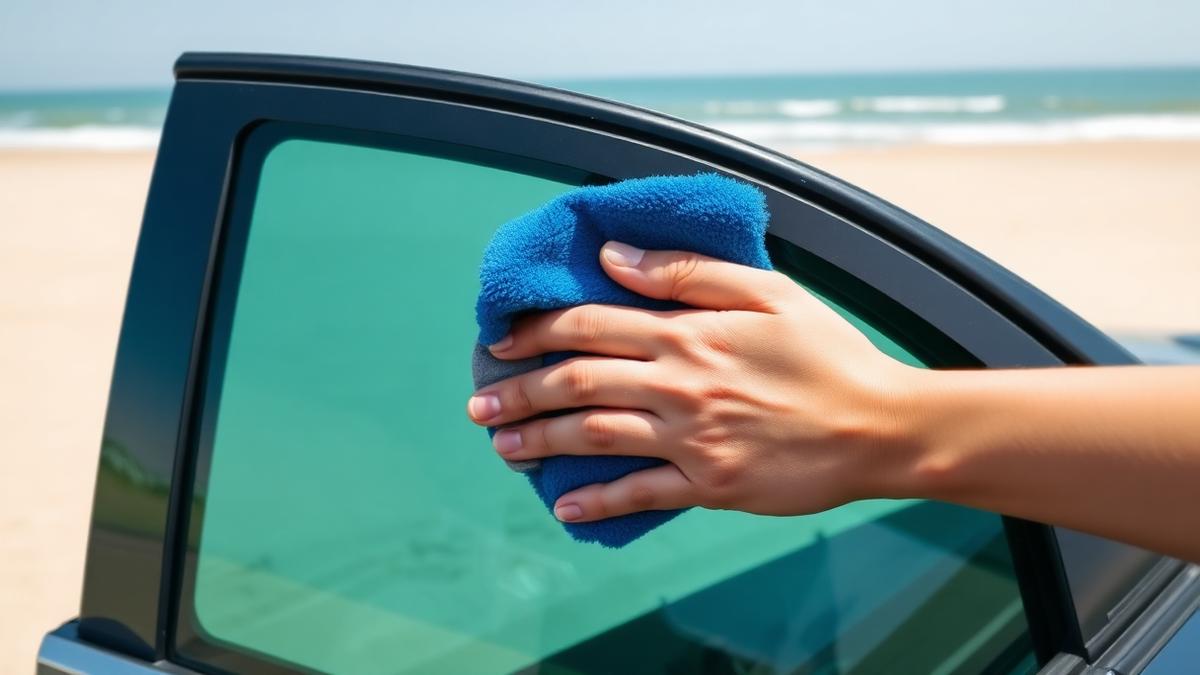
**Short answer:** rinse before you wipe, use an ammonia-free cleaner and two microfiber towels, and never dry-wipe sandy glass. That's 95% of beach-town tint care.
Dry-wiping sandy glass drags grit across the film's hardcoat. That's the fine scratch haze you see on beach cars. Always rinse or spray first.
Leaves a mineral haze that fogs the view and makes people scrub harder — which causes the scratching above. Wash weekly if you park near the water.
Oils transfer from hands and arms to the inside of the door glass and smear badly. Ammonia-free interior glass cleaner removes it; ammonia will eventually break down film adhesive and dyes.
1. Rinse or mist the glass — never start dry 2. Ammonia-free glass cleaner sprayed on the towel, not the glass 3. Wipe with microfiber towel #1 (horizontal outside, vertical inside — makes streak sources obvious) 4. Buff dry with microfiber towel #2 5. Never use paper towels, razor blades, or scrubby sponges
Peeling edges, bubbles that grow, or delamination are warranty issues, not cleaning issues. Ceramic and carbon installs carry a lifetime warranty — call (760) 274-7809.
Standard Windex contains ammonia. Use an ammonia-free formula.
Weekly outside, monthly inside is plenty for most drivers.
Coastal Tint is North County San Diego's mobile window tint specialist. We come to your driveway with premium film and a lifetime warranty.